
Start a Santa Rosa Resident Search
Santa Rosa is an incorporated city and the seat of Sonoma County, so a resident question may cross city, county, and state systems. The right first source depends on the clue in hand. An address points toward the assessor and permit systems. A recorded transaction points toward the Clerk-Recorder. A current registration question belongs to the voter’s own state lookup. A family-history question may begin in the library, newspapers, or a historic directory rather than in a current roll.
Those sources do not describe the same thing. An assessed owner is not automatically the person who lives at a parcel. A deed names parties to an instrument, not every household member. A directory captures a person at a particular publication date. Use each result as one piece, preserve the date and spelling, and seek a second independent record before treating a lead as settled.
- Choose the record type. Decide whether the goal is a parcel connection, a recorded instrument, a court event, a vital fact, a public role, or historical presence.
- Start with the narrowest search. Use the county parcel search for a known street address, the recorder index for a known party or document, and the official voter tool only for the authenticated person checking their own status.
- Anchor the name or place. Compare a middle name, address, legal description, case role, entity number, or date. Common names need more than one matching detail.
- Move to the right custodian. Court files, vital copies, city permits, county deeds, and state licenses each have their own access rules and correction path.
- Use historical and request channels. Search local directories, newspapers, maps, or archives for an older trail, then ask for an identifiable existing city record when no published source answers the question.
The result is a source trail, not a single master list. That distinction keeps a Santa Rosa residents directory useful for family research, property history, civic questions, and reconnecting while respecting records that are restricted or confidential.
Where Santa Rosa Resident Records Live
Four local desks divide the work. The Santa Rosa City Clerk coordinates city records and the city index. The Sonoma County Clerk-Recorder holds recorded land instruments and county vital records. The Assessor identifies parcels and maintains the assessment roll, but its Internet results omit owner names. The Registrar of Voters handles registration services and regulated voter-file requests. The Superior Court is a separate custodian for cases, hearings, and filed documents.
These distinctions matter when a Santa Rosa address appears in more than one system. City permits and code material belong to Santa Rosa when the parcel is incorporated. A county-edge parcel may carry a Santa Rosa mailing locality while routing land-use work to Permit Sonoma. The office that owns the record can explain its search fields, fees, redactions, and appeal or correction route.
Santa Rosa City Clerk
100 Santa Rosa Avenue, Room 10
Santa Rosa, CA 95404
707-543-3015
Mon-Thu 8-5; every other Fri 8-1
City Records Index and request route
Sonoma County Clerk-Recorder
585 Fiscal Drive, Room 103
Santa Rosa, CA
707-565-3800
Recorded instruments and county vital records
Official Public Records search
Sonoma County Assessor
Parcel search by fee parcel, assessment, or street address
Online owner-name search is not provided
Office assessment roll available for inspection
Assessor parcel information
Sonoma Registrar of Voters
435 Fiscal Drive
Santa Rosa, CA; PO Box 11485, 95406
707-565-6800
Mon/Tue/Thu/Fri 8-5; Wed 8-4
California My Voter Status
The County Recorder does not conduct title research, and the City Clerk does not create a new record to answer an open-ended question. Supplying a known document, date range, parcel, or permit type makes each request easier to route.
Santa Rosa Residents and Parcel Search
The Sonoma County Assessor parcel-information guide shows the three search modes available for a Santa Rosa parcel: fee parcel, assessment, and street address.
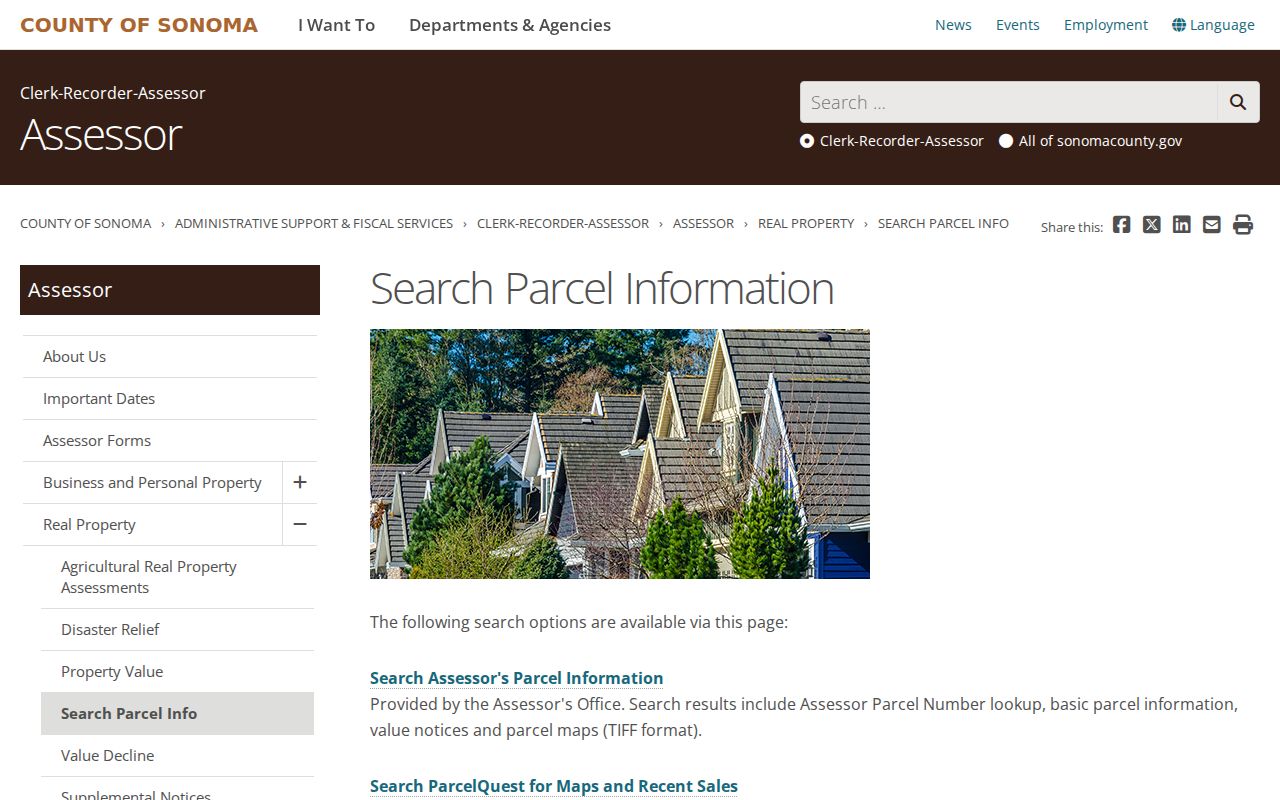
The guide is useful because it states the key boundary plainly: Internet parcel results do not show owner names. They can return a parcel number or APN, situs address, assessment-roll information, assessed-value notices, Proposition 8 notices, and a parcel map. The roll is updated on the county’s published schedule, and the map is an assessment aid rather than proof of a legal building site.
The search-field pattern is simple. Select one mode, enter the matching value, and use the address tips when a street search fails. Address entry may omit Street, Road, Drive, or Lane and use W for West. A partial address or parcel number can also reach a value notice. The office counter is the documented fallback for viewing assessment records and obtaining copies when the online result does not answer the owner question.
| Field label | Type | Required | Options and format notes |
|---|---|---|---|
| SEARCH BY | Dropdown | Yes | FEE PARCEL, ASSESSMENT, or STREET ADDRESS |
| Fee parcel / Assessment / Address | Text | Yes | Dynamic label; use the selected search mode |
| Search | Button | Action | Runs the selected search |
| Quick Search | Text | No | Accepts a FEE PARCEL value |
The assessor result starts the address-to-record chain. It does not finish it. Save the APN and legal or parcel-map references, then move to the office roll or the recorder’s party index when ownership history is the question.
Santa Rosa Recorder Records Trail
The County Clerk-Recorder’s ordinary Official Public Records index begins in 1964. It points to party names, recording or document numbers, document titles, and dates, with APNs appearing on some newer deeds. The index works like a library card catalog: it identifies a document but does not prove what the underlying instrument says. Legal description controls when an APN is stale, wrong, or changed by a subdivision or merger.
The Sonoma County official and historical records guide explains the older path and the copy channels.
Earlier work is still possible. Digitized grantor-grantee indexes cover 1830-1963, while county descriptions place handwritten office volumes back to 1835. Recorded documents from 1835-1979 survive on microfilm and digital images, and 1980-present images are on computer. Name variants matter because first-word abbreviations were used in 1964-1990, later words may remain abbreviated after 1990, and staff stopped abbreviating unless the instrument did so beginning January 1, 2010.
Access changes with the request. The online index is free after the disclaimer, and a known 1964-present document can be downloaded for $4 plus a $2 card convenience charge per transaction. Office image inspection is free, with copies at $5 per page, certification at $4 per document, and a $2.50 card convenience charge. Email requests are limited to 1964-present documents under 10 pages at $6 per document, while pre-1964 email copies are $6 per page and cannot be certified. Mail requests use a document number and cost $5 per page plus $4 certification. The office does not choose the instrument for the requester.
- Roll
- A custodian’s organized record of assessment or registration facts. A roll is not a complete household list.
- Index
- A catalog-like pointer to a record. A recorder index identifies an instrument but does not prove the image’s full contents.
- Parcel
- A defined piece of land tracked by an assessment identifier or APN. Splits and mergers can change the identifier.
- Criss-cross directory
- A directory organized by address or telephone rather than alphabetically. No complete Santa Rosa reverse-directory run was verified.
The safest sequence is address to APN, APN to assessed-owner evidence at the counter, party name to the recorder index, and document number to the image or copy request. That sequence separates a land record from a current household and preserves the source’s own limits.
Santa Rosa Court Lookup by Party
Sonoma Superior Court uses the Odyssey portal rather than an unrestricted statewide name list. A searcher creates an account, validates an email, requests the Registered Public role, and then uses Smart Search for a case number or party. A partial name can use the * wildcard. Search results may show hearings, register-of-actions entries, and dispositions; authenticated users can reach eligible civil documents when remote display is permitted.
The Sonoma Superior Court online-services hub is the source for the portal and request routes.
Remote access has limits. Juvenile, sealed, adoption, confidential mental-health, and protected portions of family matters are not general public name-search material. The court’s 2026 relocation moves records and related clerk functions to 625 Administration Drive, with most affected hearings beginning there in July; felony hearings remain at the older courthouse during the transition. Represented-party criminal and juvenile e-filing became mandatory January 1, 2026 under Local Rule 17.22. Confirm the current location before going in.
For a paper file, the Records Department lists 707-521-6670 and Monday-Friday hours of 8-3:30. Mail requests need a self-addressed stamped envelope and a check payable to the court marked “Not to exceed $___” when page counts are unknown. Copies are $0.50 per page, certification of a filed document is $40, dissolution judgment certification is $15, research over 10 minutes is $15, and archived retrieval is $5 per file. In-person requests and the CR-01 form provide the other documented channels.
- Case identifier and case type identify the court matter.
- Party names and roles distinguish a petitioner, respondent, plaintiff, defendant, or other listed party.
- Hearing date, courtroom, and judicial officer place an event in the docket.
- Register-of-actions entries and disposition show later procedural events when entered.
A court hit needs a second anchor. Match the role, date, geography, or case number before connecting a namesake to a Santa Rosa resident record.
Santa Rosa Voter Lookup
California My Voter Status is a self-lookup. It asks for first name, last name, full date of birth, and either a California driver license or identification number or the last four digits of a Social Security number. The identity fields are designed to let a voter check their own registration, not browse a Santa Rosa street or retrieve another person’s home address.
The California My Voter Status lookup shows the authenticated voter’s registration status and county information.
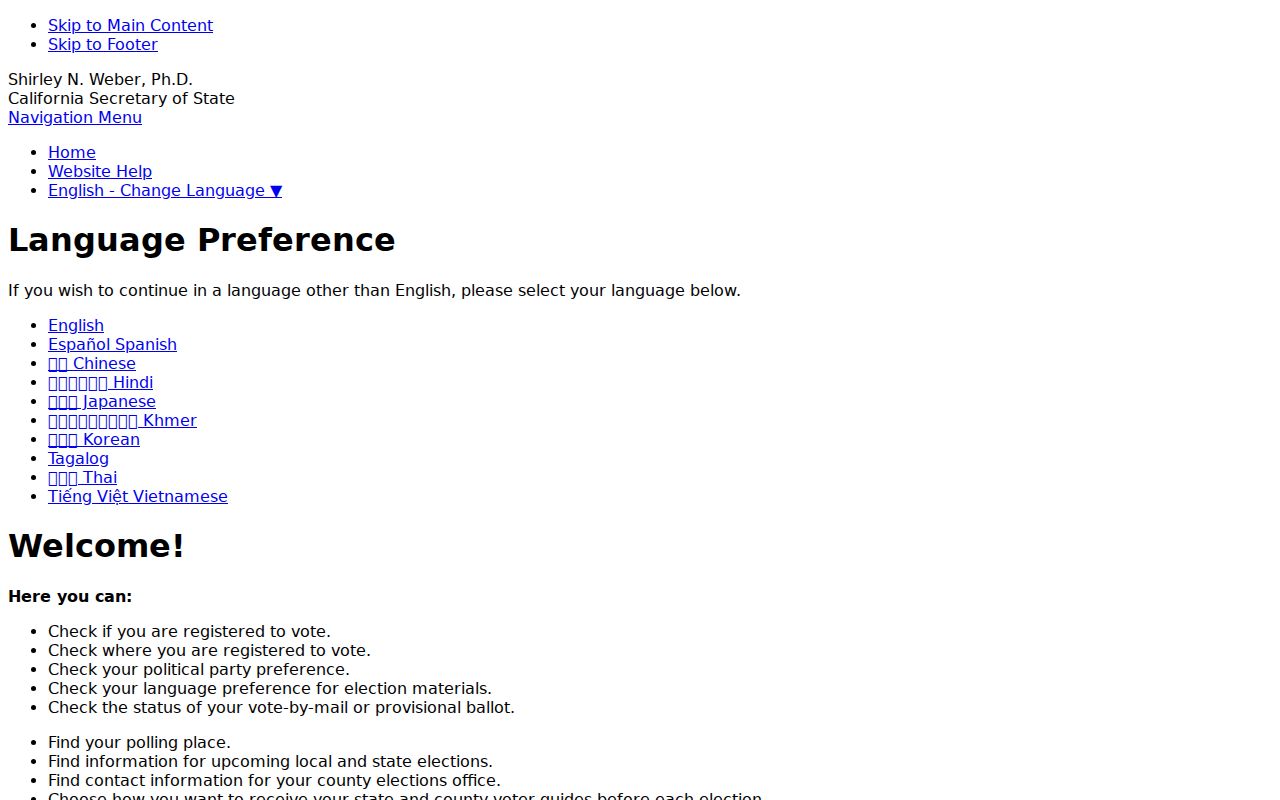
Possible results include registration status and location, party preference, language preference, vote-by-mail or provisional-ballot status, polling place, upcoming election information, county contact, and guide-delivery preference. Online registration changes may take at least 24 hours to appear. The public voter file is a different channel. Elections Code §2194 and related rules limit access to eligible election, scholarly, journalistic, political, or governmental purposes, with a regulated fee of $15 per 1,000 records up to $100.
Protected fields remain outside ordinary disclosure. Home street address, phone, email, precinct number, prior registration information, driver license or identification number, Social Security number, unique voter identifier, and signature have statutory restrictions. Sonoma County Registrar of Voters staff can be reached at 435 Fiscal Drive, Santa Rosa, 707-565-6800, or 800-750-VOTE, with voter-registration and materials contacts listed by the office.
For historical street presence, use the library’s directories and public census schedules instead of treating the voter tool as a public roll. A current voter result is a registration fact, not a complete Santa Rosa residents directory.
Santa Rosa Vital Records and Copy Rules
Birth, death, marriage, and divorce records take different routes. Sonoma County Clerk-Recorder handles Sonoma County births, deaths, and marriages, while California Department of Public Health forms provide the statewide route. Divorce decrees remain Superior Court records, with a separate state certificate of record for qualifying years. A historical index or informational copy is not the same as an identity-valid certified copy.
The Sonoma County birth-certificate page explains local coverage, eligibility, and ordering.
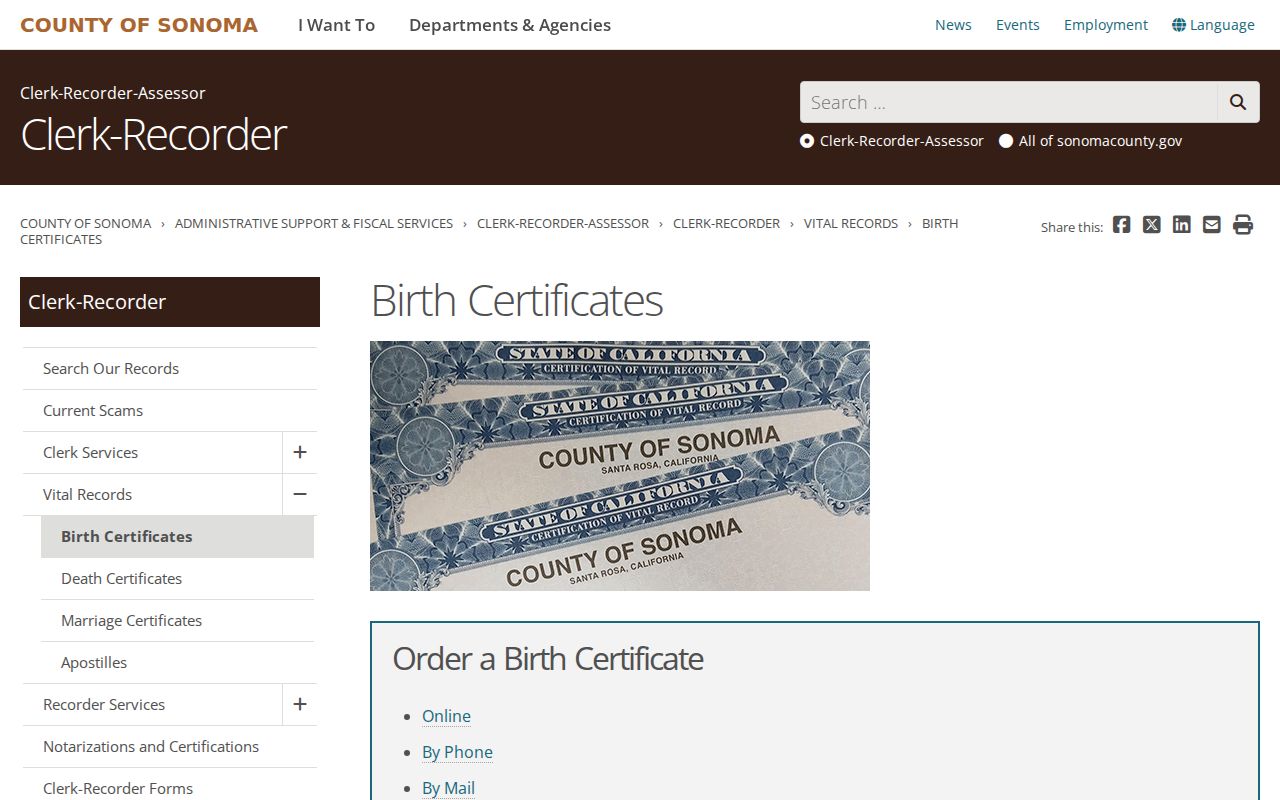
County birth coverage begins October 14, 1855, and a birth registration reaches the county about one month after the event. Mail orders require an application, check, notarized sworn statement, and the requested identification or instructions; missing notarization is rejected. In-person applicants use the county process, and an event in another California county must be requested from that county or through CDPH.
California Health and Safety Code sections 103525 and 103526 distinguish authorized certified copies from Certified Informational Copies. Authorized birth-copy recipients include the registrant, a parent or legal guardian, certain close relatives, a court-order recipient, qualifying attorneys or agencies, and law enforcement or government acting officially. Other eligible requesters may receive an informational copy marked as not valid to establish identity. The state does not turn every older vital certificate into an unrestricted genealogy record.
Research costs also differ by custodian. The county page posts $32 for a birth copy, while CDPH’s 2026 schedule lists $31 for birth, $26 for death, $19 for marriage, and $18 for a divorce certificate of record. AB 64 raised many copy fees by $2 beginning January 1, 2026 and permits approved diacritical marks; from July 1, 2026, CDPH directs applicants to its own forms rather than third-party online vendors. Fees can be retained when no record is found, and CDPH payment uses a check or money order from a United States bank. Compare the record type, event county, eligibility, and current fee before sending a request.
Santa Rosa Business and License Records
A public role can supply a useful identity lead without turning into a residence claim. California bizfile Online searches by entity name or file number and supports advanced filters for entity grouping or type, status, and initial filing date. Results can show a name and number, formation or registration date, status, jurisdiction, street and mailing addresses, agent, and Statement of Information due date. The state record does not generally establish beneficial ownership and does not supply a universal phone, email, or subsidiary field.
The California business-entity search shows how an official entity result can be separated from a personal resident result.
The California Department of Consumer Affairs License Search adds Board or Bureau, license type, license number, business name, first name, last name, and registry number fields. Results can show current or expired status and discipline. Contractors, real-estate licensees, attorneys, educators, and alcohol licensees may use separate official systems, so a DCA result is not a universal no-record answer.
Use these records to verify a public business or professional connection, then return to the custodian when a correction is needed. A business agent, permit contact, or license holder may be linked to a project or entity without being the person who occupies a nearby address.
Santa Rosa Sources for Current Residents
Current sources overlap, but none is a complete Santa Rosa residents directory. The assessor connects an address to parcel facts and the office roll may show an assessed owner. The recorder connects a party to an instrument. The voter system authenticates one voter or serves an approved file request. Court, city, vital, business, and custody records answer still narrower questions.
| Source | Best lead | Custodian | Access boundary |
|---|---|---|---|
| Assessor parcel search | APN, situs, values, notices, map | Sonoma County Assessor | Online address, assessment, or fee-parcel search; no owner names |
| Assessment roll | Assessed owner and roll facts | Sonoma County Assessor | Office inspection and copies |
| Recorder index | Parties, instrument type, date, number | Sonoma County Clerk-Recorder | 1964-present online; older indexes and office channels |
| My Voter Status | One voter’s registration information | California Secretary of State | Authenticated self-lookup |
| Odyssey | Cases, hearings, actions, disposition | Sonoma Superior Court | Registered Public account; restricted categories absent |
| City Records Index | Permits, planning, GIS, code, and city records | Santa Rosa City Clerk | Online index and CPRA route |
| Historical directories | Listed people and businesses by issue | History and Genealogy Library | Digital collection or in-library use |
California Safe at Home gives eligible participants a designated mailing address, mail forwarding, an agency-for-service address, and confidential voter registration. It does not erase information already public, and a property legal description can still reveal a location. Protected residents should contact the program before placing a residence into a public request.
When the question shifts from a source category to one person, a Santa Rosa resident lookup should join at least two independent facts rather than treating one directory hit as proof.
A custody search is separate from a residents directory. The Sonoma County Sheriff incarcerated-person search carries a disclaimer and may be delayed by outages or updates.
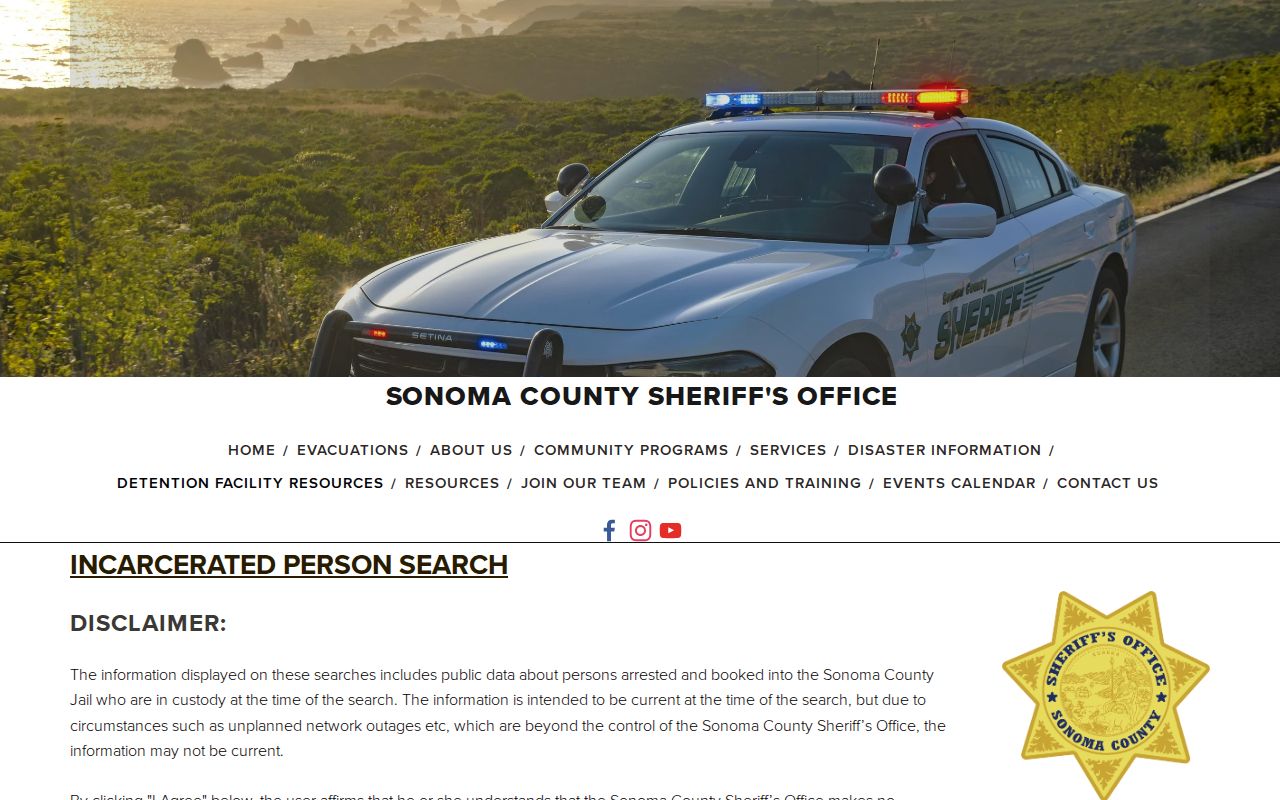
A Sheriff result concerns current county custody data, not a complete criminal history, household membership, or proof of a current Santa Rosa address. Treat it as a narrowly defined official status result and read the portal’s own limits.
Santa Rosa Public Records Requests
Santa Rosa’s City Records Index should be checked before a California Public Records Act request. The index routes people to permit history, planning and use permits, zoning, GIS, financial records, and other direct repositories. City records can include building plans, site plans, conditional-use permits, code-enforcement material, soils reports, encroachment permits, parcel maps, certificates of occupancy, grading permits, easements, police reports, and CAD logs, subject to exemptions and redaction.
The Santa Rosa records request and index page is the documented city starting point.
Santa Rosa reported 1,701 public-record requests from 1,086 unique requesters in 2025, compared with 1,515 requests from 1,020 unique requesters in 2024. The city favors electronic production. Ordinary black-and-white letter pages are $0.10, while large-format, color, postage, or third-party duplication can cost more. A requester may appeal a denial.
CPRA permits a request for an identifiable, nonexempt existing record. The ordinary determination window is 10 days, with a written extension of up to 14 days for specified unusual circumstances. Inspection is generally free, while copies may be charged at direct duplication cost or another statutory rate. The Act does not require an agency to create a record, answer an open-ended question, or release exempt personal, investigative, juvenile, sealed, privileged, or security material.
The City Clerk is at 100 Santa Rosa Avenue, Room 10, Santa Rosa, with counter hours Monday-Thursday 8-5 and every other Friday 8-1. Start with the index, name the record and date range, and use the request route for material that is not already published. An indexed city record can add a dated, verifiable layer to a Santa Rosa residents directory trail.
Santa Rosa Resident Leads and Unclaimed Property
California’s unclaimed-property search is a useful human-use lead because it is free and can refine a name by city and ZIP. The search accepts a last or business name or a property ID, with optional first name, city, and ZIP fields. It returns exact and similar names and offers a claim path. Dormant property generally reaches the program after three or more years.
The California unclaimed-property search can narrow a family or identity question before a source custodian is contacted.
A match is not proof that a person lives in Santa Rosa. Similar names, old addresses, business records, and dormant property can all create a false connection. Compare the city or ZIP lead with a deed, court record, vital record, entity number, or another dated source. The same rule applies to public license records and old newspaper references: a lead earns trust through independent agreement, not through a broad search result.
For a family-history search, preserve the exact spelling and the result date, then ask the relevant custodian for the record that can confirm the fact. Unclaimed property is a pointer to a possible relationship, not a resident roll.
California’s 2026 DROP platform, created under the Delete Act, lets a verified California resident send one free encrypted request to more than 500 registered data brokers. Optional identifiers can improve matching, and deletion plus ongoing non-sale obligations begin August 1, 2026. The California DROP route is a state privacy channel, not a replacement for correcting the county or court source.
Santa Rosa Geography and Resident Records
A Santa Rosa postal address does not guarantee that a parcel is inside the incorporated city. Roseland’s annexation history makes the point clear: approximately 714 acres in five formerly unincorporated islands, including Roseland, Victoria Drive, West Hearn Avenue, Brittain Lane, and West Third Street, came into the city while addresses already used Santa Rosa and ZIP codes 95401 or 95407. Postal city, association territory, county service, and incorporation are separate layers.
Use the city parcel or GIS system to decide whether a city permit route applies. An incorporated parcel belongs with Santa Rosa permitting. A parcel outside city limits routes land-use work to Permit Sonoma, even when the mailing locality reads Santa Rosa. County ActiveMap is chiefly described for unincorporated Sonoma County, so its zoning and land-use layers should not be projected onto a city parcel without checking jurisdiction.
The old street grid adds another historical check. Santa Rosa’s 1853 plan centered on the plaza, and the 1854 plat covered the early downtown core. Later additions and subdivisions make street text less stable than a legal description. The 1906 earthquake changed downtown buildings and business evidence, while the 2017 Tubbs fire created rebuilding and permit trails. These records document place and change, not present occupancy.
For current research, save the situs address, APN, jurisdiction, and ZIP as separate fields. For older research, add the issue year, map year, newspaper run, and directory spelling. That habit keeps a Santa Rosa residents directory trail from mistaking a boundary change for a vanished resident.
Official Santa Rosa Resident Rolls Compared
Official rolls and commercial compilations serve different purposes. An official source has a named custodian, a defined record type, and a stated access rule. A commercial compilation may make a broad search feel quick by combining many feeds, but its refresh date, matching method, and source chain can be unclear. Neither category should be treated as a complete list of Santa Rosa residents.
| Question | Official local or state source | Commercial compilation category |
|---|---|---|
| Where did the fact come from? | Named recorder, assessor, court, city, library, or state custodian | Mixed feeds with uneven source detail |
| How is a result matched? | Documented fields, role, parcel, case, or identity data | Broad name matching can merge namesakes |
| How is an error fixed? | Contact the custodian that created the record | Profile changes may not alter the public source |
| What is protected? | Sealed, confidential, voter, vital, and Safe at Home data remain restricted | Coverage and suppression practices vary |
| What is the best use? | Family history, property history, civic research, and source verification | Convenience lead that still needs official checking |
The comparison favors traceability. A dated deed, a court register, a library scan, or an authenticated voter result tells you what was actually searched. A broad compilation can suggest a next step, but neither category is a complete Santa Rosa residents directory, and the source holder remains the place to confirm or correct it.
Lawful use. Santa Rosa public records support personal, family-history, property, civic, and source-verification work. Do not use a name or address to stalk, harass, threaten, or cause unwanted contact. Protected data and confidential records remain restricted.
Tracing Santa Rosa Through Old Directories
Santa Rosa’s historical directory shelf reaches from the 1870s into the early 1950s across a broad digitized Sonoma County collection. Verified local examples include Santa Rosa directories from 1903, 1908, 1911-13, 1915-20, 1918, the Polk-Husted 1909-10 volume, the Press Democrat’s 1924 directory, and a cluster of Pacific Telephone and Telegraph issues from 1921 through the 1930s. A directory entry can preserve a printed name, occupation, business relationship, and street address for its issue year.
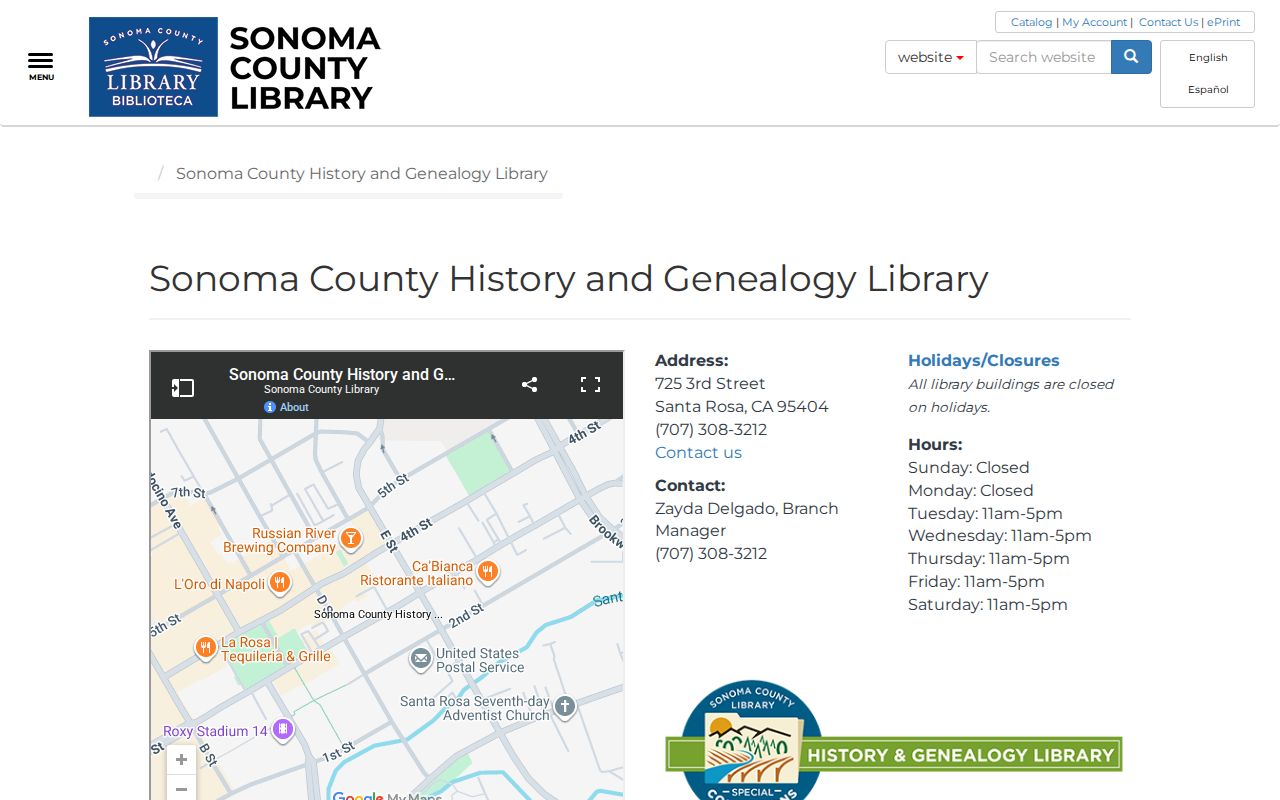
The longer treatment of the collection belongs in the Santa Rosa Directory Book. For a first local stop, the History and Genealogy Library is at 725 Third Street, Santa Rosa, 707-308-3212, and is open Tuesday-Saturday from 11-5. Materials are noncirculating and used in the library, which has public computers, digital microfilm readers, and document and book scanners.
The Sonoma County History and Genealogy Library listing shows the local facility and its research equipment.
The library began as the Sonoma County Room in 1967 and moved to its present adjacent building in 1994. Its newspapers, maps, photographs, county archives, local directories, and government records can fill gaps left by modern portals. A 1854 mule team physically moved the county archives from Sonoma to Santa Rosa when the county seat changed, which helps explain why so many county record counters and historical holdings remain concentrated here.
Read an old directory as a dated observation. Search the scan and then inspect the page because OCR can miss surnames and abbreviations. Compare adjacent issues, newspapers, census schedules, deeds, permits, maps, and obituaries. That combination turns a historical entry into a careful resident-history lead without pretending that an old directory is a current Santa Rosa residents directory.